About the Inaugural Canadian Gene & Cell Therapy Conference

Canada’s gene and cell therapy (GCT) community has largely convened abroad, contributing to global conversations while building only loosely coordinated national connections. At a moment when Canada is investing deliberately in domestic capacity, supply chain sovereignty, and Canadian-built research infrastructure, the absence of a dedicated national forum is a gap the field can no longer afford to carry.

The Inaugural Canadian Gene and Cell Therapy Conference is that platform. Over two days in Montréal, it convenes researchers, clinicians, manufacturers, regulators, industry partners, trainees, and patient and family partners across the full translational pipeline, from discovery through to patient access. The relationships built here will shape Canada’s national GCT community for years to come.

Planning Committee

Andreea Norman
Andreea Norman is Co-Founder and Director of Strategy & Operations at Gene Therapy Canada, where she is helping build Canada’s gene therapy ecosystem through strategic partnerships, cross-sector collaboration and national initiatives that support innovation and patient access.
 
With over 15 years of experience across Canada’s life sciences sector, spanning research, innovation and commercialization, Andreea holds a BSc in Cell and Molecular Biology and an MSc in Molecular Genetics from the University of Toronto. She is committed to advancing Canada’s gene therapy ecosystem by translating scientific innovation into meaningful patient impact.
Breanne Stewart
Breanne Stewart (Ex Officio) (BSc, BScN, RN) serves as the Network Director for RareKids-CAN: Pediatric Rare Disease Clinical Trials and Treatment Network- she provides strategic leadership, oversees operations, and drives collaboration within the network. With a focus on shaping RareKids-CAN’s direction, Breanne is dedicated to fostering partnerships and ensuring the delivery of high-quality clinical trials and innovative research initiatives for individuals affected by rare diseases. Having joined MICYRN in 2018 as the inaugural Associate Director of Clinical Trials, Breanne is deeply passionate about optimizing research processes in Canada to ensure timely and efficient treatment and access to therapies for patients and their families.
Catherine Strandt
Dr. Catherine Strandt (DMSc) is the Project Manager for RareKids-CAN, providing leadership across academia, nonprofit, government, and industry to advance pediatric rare disease research and innovative drug development. She specializes in rare disease strategy, clinical trial readiness, and patient advocacy, and holds a Doctor of Medical Sciences from Northeastern University.
Previously, Dr. Strandt was a Clinical Research Fellow at Global Genes, co-leading the Research Readiness Program, and worked at Harvard Medical School and Boston Children’s Hospital supporting multi-disciplinary research for rare genetic and neurological disorders.
Cindi Morshead
Dr. Morshead is a Professor of Surgery at the University of Toronto, her work sits at the intersection of basic science and clinical translation: developing cell-based strategies, including cellular reprogramming and gene therapy, that move from laboratory discovery toward clinical benefit. Throughout her career, Dr. Morshead has led multidisciplinary teams spanning academic and industry partnerships, with a consistent focus on improving recovery outcomes for patients with complex neurological conditions. Her expertise is in neurobiology, preclinical models of injury/disease, bioengineering and lineage analyses. Her team has developed innovative methodologies for the treatment of brain injury, contributing to ongoing clinical trials and pursuing novel strategies to activate neural repair mechanisms including the application of electrical stimulation and astrocyte to neuron cellular reprogramming to replace lost cells. 
Ella Korets-Smith
Ella Korets-Smith is a biotechnology executive, company builder, and board director with more than 20 years of experience advancing life sciences technologies toward commercialization. She has particular expertise in gene therapy, vaccines, biologics, immunotherapy, regenerative medicine, and oncology, with a track record spanning company formation, business development, licensing, strategic partnerships, fundraising, and commercialization planning.  
 
Ella is co-founder and past Chief Business Officer/Chief Strategy Officer of Virica Biotech and was co-founder, CEO, and Director of Virano Therapeutics, raising $20M in dilutive financing and driving commercialization programs.  She is also Founder of Gene Therapy Canada, a grassroots initiative connecting Canada’s gene therapy community to accelerate innovation and patient impact and Board member of Defeat Duchenne Canada.
Isabelle Aubert
The research of Dr. Isabelle Aubert and her team at Sunnybrook Research Institute is centered on non-invasive methods to deliver gene therapies to the brain. These therapies aim to halt neurodegeneration and support the regeneration of neuronal and glial cells. Her approach brings together image-guided focused ultrasound and gene therapy.
 
Dr. Aubert holds appointments as Senior Scientist at Sunnybrook Research Institute, Professor at the University of Toronto, and Tier 1 Canada Research Chair in Brain Repair and Regeneration. She is an elected Fellow of the Canadian Academy of Health Sciences.
Jack Hickmott
Dr. Jack W. Hickmott is a Research Associate at the University of Toronto and the Donnelly Centre for Cellular and Biomolecular Research (CCBR). With over a decade of experience, he has worked on gene therapies in Canada and the United Kingdom, contributing to advances in both research and education. His work focuses on advancing next-generation gene therapies through innovative research and collaboration across academia and industry. Using preclinical models, his research has explored therapeutic strategies for blindness, lung disorders, and stroke, with the aim of translating scientific discoveries into new treatments that improve patients’ lives. To strengthen the gene therapy field nationally, Jack co-founded Gene Therapy Canada, an initiative dedicated to uniting Canadians working in the field.
Jagdeep Walia
Dr. Jagdeep Walia is a Physician-scientist –a medical geneticist and full-time professor in the Division of Medical Genetics, Department of Pediatrics at Queen’s University, Kingston, ON, Canada. In his clinical work, Dr. Walia consults across a broad range of genetic issues that affect children and adults, including cancer, prenatal diagnosis, metabolics and general genetics. He teaches genetics at the undergraduate and postgraduate levels. His lab focuses on developing novel gene therapy approaches for many inherited neurodegenerative and neurodevelopmental disorders including GM2 Gangliosidosis, Creatine deficiency disorders, XLID98 and Galactosemia.
Jillian Banfield
Dr. Jillian Banfield is the Lead for Patient Partnership at CIHR’s Institute of Genetics. She develops processes, guidance, and relationships to enable patients and caregivers to contribute their lived expertise to health research.

Jillian has extensive experience in clinical research and patient partnership in research. Jillian also lives with a genetic condition and disability, so brings her lived experience to her work.
Prior to her work in clinical research, Jillian obtained a PhD in Social Psychology from the University of Waterloo.
John Adams
Co-chair, Health Canada implementation advisory group on the National Strategy for Drugs for Rare Disorders
Senior Fellow on health policy, Macdonald Laurier Institute
Vice-Chair, Best Medicines Coalition
Advocacy Advisor, Canadian PKU and Allied Disorders
John Mitchell
Dr. John Mitchell completed medical school at the University of British Columbia and his pediatric and endocrine fellowship at McGill University. He went on to complete a research fellowship in metabolic disease in Sydney Australia In addition to his pediatric endocrinology practice, he practices as a biochemical geneticist where he follows both adult and pediatric patients with metabolic disorders. He has been extensively involved in development of national and international clinical practice guidelines for phenylketonuria, Morquio A, Maroteaux-Lamy and Hunter syndrome. He is involved in cutting edge therapies for orphan diseases including chaperone therapies, enzyme replacement therapies, fusion proteins and gene therapies.
Marie-Eve Paquet
Marie-Eve Paquet is Associate Professor of Anesthesiology and Intensive Care at Université Laval, Scientist at the CERVO Brain Research Centre, and Adjunct Professor at McGill University. Trained in immunology at the University of Toronto (PhD) and in cell biology and virology at Harvard Medical School/Whitehead Institute (PDF), she is the founder and Scientific Director of the Canadian Optogenetics and Vectorology Foundry (COVF) — a national open-science platform serving over 250 laboratories worldwide and generating more than 2500 tools annually distributed across the globe. Her research develops viral vectors, genetically encoded biosensors, and optogenetic tools for translational neuroscience and gene therapy. She is also interested in new approaches for efficient biomanufacturing of Adeno-Associated Viruses and validation of genetically encoded tools. She holds the NSERC/FRQ-NT Chair for Inclusion in Science and Engineering, championing diverse career paths and the recognition of platform scientists across Canada.
Nancy Braverman
Dr. Nancy Braverman is a clinician-scientist who studies Peroxisome Biogenesis Disorders (PBDs). She participated in identifying the genes defective in these disorders, characterizing the mutation spectrum and generating novel mouse and cell models to test targeted therapies. She is currently developing retinal and CNS gene augmentation therapy, and testing RNA and ASO based therapies. 
 
She runs a large North American natural history study and biobank, as well as a prospective vision study for PBD. She is Professor in Pediatrics and Human Genetics at McGill University, attending geneticist at the McGill University Health Center (MUHC), and Senior Scientist at the Research Institute of the MUHC. She is co-chair of the ClinGen expert panel on variant curation in peroxisome disorders, and serves on the medical advisory boards for the Global Foundation for Peroxisome Disorders and RhizoKids International. She received her MSc in Genetic Counseling at Sarah Lawrence College, her MD from Tulane University School of Medicine, completed her pediatrics residency at Yale-New Haven Hospital, and her genetics fellowship at Johns Hopkins Medical Center.
Nicola Wright
Regine Benchetrit

Regine Benchetrit is Director, Development & Partnerships at MICYRN, where she leads sponsorship and industry funding strategy across the organization’s national platforms, including RareKids-CAN and IMPaCT. 

With 18+ years in fundraising and partnerships, her background includes work with national and global brands including Coca-Cola, Pepsi, TELUS, Tim Hortons, and the Olympic and Paralympic Games, along with fund development leadership at Cystic Fibrosis Canada, Special Olympics, Canada, and Sinai Health Foundation and experience in the Salesforce ecosystem including her time at Deloitte, supporting nonprofit systems and data strategy.
Risini Weeratna
Sarah Wootton
Thierry Lacaze

Dr. Thierry Lacaze-Masmonteil (Ex Officio) is the RareKids-CAN Nominated Principal Investigator and the Scientific Director of MICYRN since 2018 and Clinical Professor of Pediatrics at the University of Calgary (UC). He is also the inaugural Scientific Director of the Women and Children Health Research Institute (WCHRI, U of A) from 2006 to 2010, and Scientific Director of the Clinical Research Unit at the Children’s Hospital of Eastern Ontario (CHEO) from 2011 to 2015. 

Under his tenure, MICYRN has acquired the expertise to function as a de-centralized Academic Research Organization (ARO), a first in Canada for the non-oncology pediatric clinical trial space. MICYRN currently provides ARO services to 15 teams of CIHR-funded investigators. Dr. Lacaze-Masmonteil co-leads the CHEER initiative, funded to streamline and improve research ethics review across Canada
Zhenya Ivakine

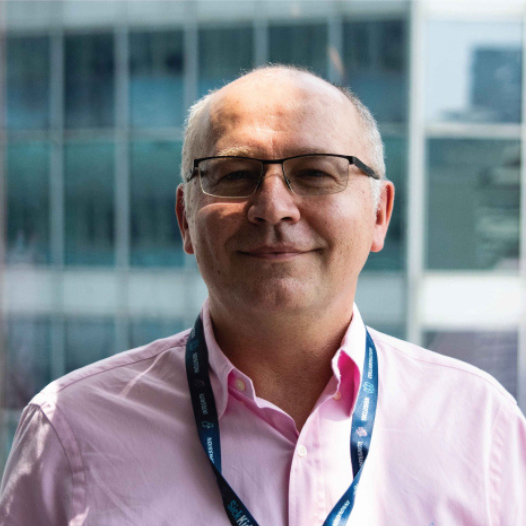
Dr. Evgueni (Zhenya) Ivakine is a scientist specializing in genetics and genome biology. He is currently a senior scientist at the Hospital for Sick Children (SickKids) in Toronto and an Associate Professor at the University of Toronto. Originally from Russia, Dr. Ivakine completed his undergraduate studies at Novosibirsk State University before moving to Canada for his graduate and post-doctoral studies. He earned his PhD from the University of Toronto and has held various research positions at SickKids since 2005. 

Dr. Ivakine’s research focuses on developing genetic therapies for childhood neurodegenerative and neurodevelopmental disorders. His lab uses advanced genome engineering tools like CRISPR-Cas9, prime editing, and base editing to understand disease mechanisms and develop precision therapeutics.